The Complete French Coast Photo Catalog: 50 Must-Have Shots for Your Collection
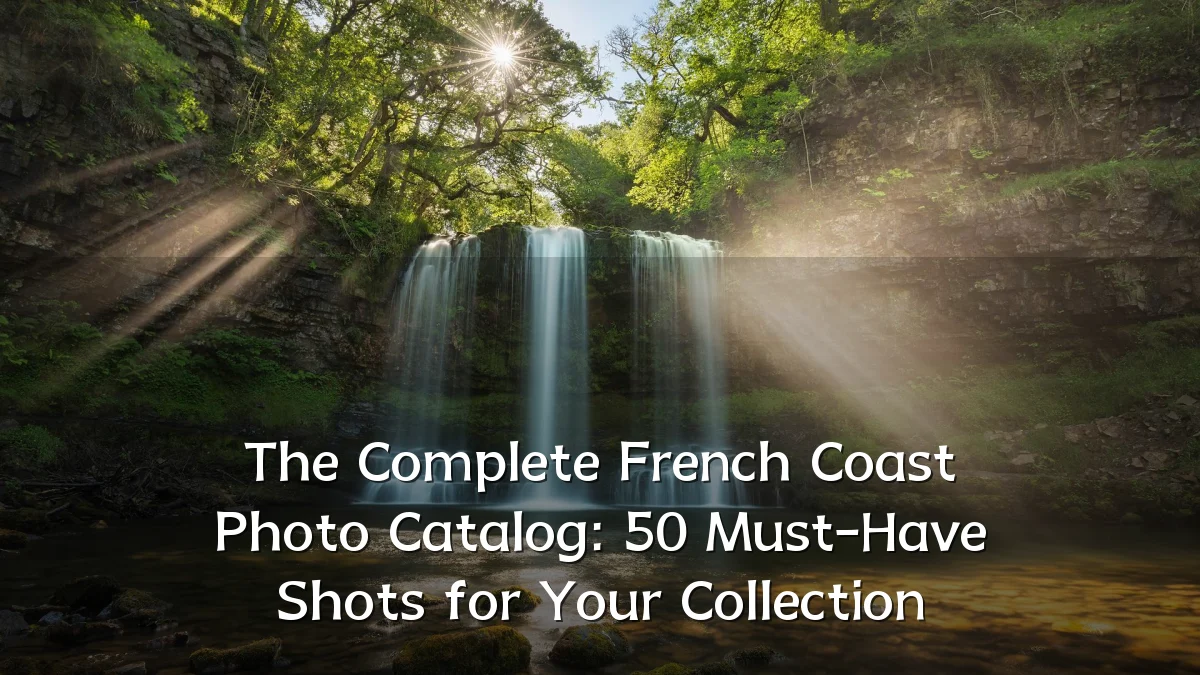
A new round of attention is being paid to structured photo catalogs focused on the French coastline. These collections typically aim to condense thousands of possible coastal compositions into a curated set of 50 essential images, offering a practical reference for working photographers, stock contributors, and serious collectors. This article reviews the format's recent traction, its editorial background, and the issues likely to shape its use.
Recent Trends
Demand for French coast photography has expanded well beyond fine-art prints. Stock libraries, social media creators, and travel publications now rely on curated sets to present a consistent visual language. A "50 must-have shots" format offers a manageable scope for photographers planning assignments or building a regional portfolio, and it gives editors a clear benchmark for evaluating submissions.

- Curated coastal catalogs are increasingly used as shooting checklists rather than sales lists.
- Buyers and creators are looking for balanced regional coverage across the Channel, Atlantic, and Mediterranean coasts.
- Emphasis on "essential" subjects — lighthouses, cliffs, harbors, beach textures, tidal patterns — appeals to both generalists and specialists.
Background
The French coastline extends across three distinct maritime fronts, each with its own rock formations, light conditions, and tidal behavior. A catalog limited to 50 images carries editorial weight because it forces decisions about location, season, and framing style. The current format follows a longer tradition of photographic field guides, though it is now oriented more toward practical planning than artistic canon.

For a photographer, the catalog operates as a checklist for coverage. For a collector, it provides a sampling frame and a basis for comparing work. For content platforms, it can function as a quality-control reference, supporting consistent labeling and composition standards across large image libraries.
User Concerns
Several practical concerns recur among users of such catalogs. Location accuracy is the most frequent issue, since coastal images are often mislabeled or over-simplified in online databases. A fixed set of 50 images also cannot fully represent regional diversity, so some degree of editorial bias is inevitable regardless of how carefully the selection is made.
- Verification of exact shooting locations and public access conditions.
- Seasonal and tidal variability — some shots are only possible within narrow weather windows.
- Licensing clarity, especially when a collector intends commercial distribution.
- Consistency of scale and perspective from one catalog entry to the next.
Likely Impact
If the 50-shot catalog becomes a widely adopted reference, coastal photography production may shift toward fewer, more intentional compositions. That would likely raise the overall technical quality of available imagery but also increase the risk of visual repetition. For independent photographers, the format offers a clean assignment brief. For agencies and stock platforms, it provides a template for commissioning, editing, and budget planning across a full coastal season.
What to Watch Next
The next development to monitor is whether this catalog format expands beyond a fixed print or web list. Interactive maps with geo-referenced shots, community-submitted locations, and rotating seasonal editions are all plausible next steps. Another signal would be the adoption of similar "must-have" catalog structures for other European coastlines, which would confirm the format as a durable editorial tool rather than a short-lived trend.
- Expansion into interactive or regularly updated digital editions.
- Community-verified layers for access, parking, and tide timing.
- Regional micro-catalogs covering Normandy, Brittany, Corsica, and the Riviera separately.
- Closer integration between must-have lists and practical field planning, including gear and weather guidance.